I mentioned a little while back that I'm trying to make a go as a freelance writer. To that end, I'm starting up a couple "professional" blogs, that I hope will garner an audience beyond just my friends.
I was planning to launch them Nov. 1, that is, tomorrow. And it looks like I'll actually have one of them up and running. The other should be up a little later this week.
What can I say but, Woo Hoo!
I'll post the links as soon as they're good to go.
Rabbert blathers on....
31 October 2009


30 October 2009
Apologies...
Sorry I've been off-line for the past couple weeks. At first, I was off in the boonies of North Carolina without any internets access; then I was in the not-so-boonies of North Carolina, where internets access cost $5/hour; then I was back home, recovering from travel; and then ... um, I was just a little lazy.
Sorry!
I'll bring you up to date a little later. In the meantime, go ahead and occupy yourselves with...
Rabbert blathers on....
Sorry!
I'll bring you up to date a little later. In the meantime, go ahead and occupy yourselves with...
Rabbert blathers on....
20 October 2009
Movie dream casts...
So the other day, a friend and I were grabbing some breakfast together, and we started thinking of dream casts that Hollywood really ought to put together.
Our first thought was:
Okay, plot is important -- but secondary, I think. So, a road movie, probably three siblings running from the cops. Let's say, a chase across Canada, with Brendan Fraser leading the RCMP.
You know you want to see it. Just remember, you heard it here first.
Another idea was for a re-make of An Affair to Remember. There were three suggestions for casting:

or, to go more for fireworks than for flames, maybe ...
And I'd like to add a runner-up pair of personal favorites:
So, what think you? Any other fun casting ideas? Any suggestions or disputations with my friends' and my brainstorms?
Rabbert blathers on....
Our first thought was:
- Christopher Walken
- Alan Rickman
- Meryl Streep
- supporting role for William Shatner
Okay, plot is important -- but secondary, I think. So, a road movie, probably three siblings running from the cops. Let's say, a chase across Canada, with Brendan Fraser leading the RCMP.
You know you want to see it. Just remember, you heard it here first.
Another idea was for a re-make of An Affair to Remember. There were three suggestions for casting:
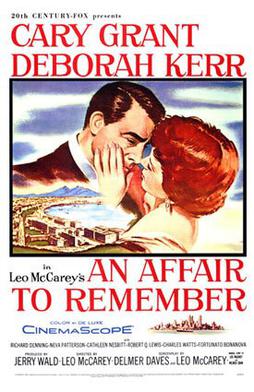
- George Clooney
- this was tough -- we sort of settled on either Catherine Zeta-Jones or Julia Roberts, but we didn't think either was perfect; and besides, both have co-starred with Clooney before
or, to go more for fireworks than for flames, maybe ...
And I'd like to add a runner-up pair of personal favorites:
So, what think you? Any other fun casting ideas? Any suggestions or disputations with my friends' and my brainstorms?
Rabbert blathers on....
17 October 2009
On gambling
 My dad loves the casino. He loves the slot machines, which I simply do not understand. For myself, I prefer something more active, something that involves skill and tactics. So, many gambling games just are not interesting to me. Among card games, Pinochle is my favorite.
I do, however, enjoy the occasional game of poker. I like the bluffing aspect. I like the choices involved in building a hand. My favorite poker game, which you'll never find in a casino, is called Chicago: it's basic seven-card stud, but the high spade in the hold splits the pot. It encourages more players to stay in, and throws a wrench in the works of reading other players' bets. Good clean fun -- as long as it's penny-nickel poker among friends.
Some of my friends oppose gambling on principle. And I'll admit that it's an easily addictive activity. I've been in games where I caught myself thinking, If only I put a little more money on the table, I could make back what I lost. But I've also been in control enough to recognize that impulse as a danger sign, a temptation. And I've been able to walk away. Most of the time.
My dad's philosophy, and it's a good one as far as it goes, is to consider gambling an entertainment activity on which you spend some money. First, determine how much you're going to spend on entertainment at the game. That becomes the only money available. You consider the money you bet to belong to the house already; it's spent money. If you win anything at all, that's gravy. If you break even, that's as good as a win.
If someone doesn't bring in more money than they can afford, and doesn't bet more than they bring in, then this system works to make an enjoyable time at betting games. If not, then gambling becomes a real problem and, at that point according to Catholic tradition, a sin.
The truth is, this kind of rule applies to any kind of entertainment activity. Sometimes it's money you're spending, sometimes it's time, sometimes it's physical energy -- usually it's some combination of the three, as for those who love to ski. If you don't overspend to begin with, and you don't let the entertainment overrun its limits, it makes for a good time. If the entertainment gets in the way of the rest of life, then it's a problem, and probably a sin.
For myself, I find the temptation strongest when there's some part of reality that I want to escape from. I use anything from TV to eating to hanging out with friends as ways to escape from difficult tasks or situations. That's a bad habit. That's a vice.
The only way to overcome it is to face reality. Do my duty. Get the job done. And, when it's time to play, play deliberately in a truly enjoyable way.
In other words, let work be work. And when I play poker, play with friends rather than to try to make money; play for the joy of the game, and joy will come whether the money stays or goes.
Rabbert blathers on....
16 October 2009
She's always a woman to me...
 I was raised in a fairly prejudice-free environment -- as much as any environment can be, I suppose. It never occurred to me that different skin color or physical features had anything to do with personality or intelligence or integrity; and it never occurred to me that women and men should be treated differently with regard to authority or dignity. I had to learn about these things in history class.
However, it has always been my instinct, and it remains my reasoned conclusion, that men and women are distinct manifestations of humanity, and therefore should act and be treated differently in respecting those differences. The question is, just what differences are essential to masculinity or femininity, and which are "social constructs" that exalt or oppress or set one sex against the other?
G.K. Chesterton, whom I am currently reading, posits that women and men occupy two distinct spheres of society: the men are specialists whose work and life is based on adherence to rules and whose relationships tend toward the egalitarianism he calls "camaraderie"; meanwhile, women are universalists, adept at everything, whose work and lives is based on the wisdom of an absolute ruler who has influence over every aspect of life within her realm.
That is to say, the sphere of men is narrow, but is free within the whole of public life; the sphere of women is broad, but is free within the limits of the home.
It's an interesting approach. He claims that it respects the freedom and value appropriate to each sex, and I have to say that I approve heartily of his goal. I'm not entirely convinced that his suggested means are the best way to get there. For example, regarding the Suffragettes, he says:
The question is not whether women are good enough for votes: it is whether votes are good enough for women.And he answers that voting takes away the particular dignity of women by imposing on them a public responsibility that (at best) distracts them and (at worst) denegrates them.
Based on his assumptions about the nature of men and women, his conclusion makes some sense. It is exactly those assumptions that I question.
Unfortunately, I don't have an answer of my own ... yet.
I am convinced that one distinctive feature of the sexes is their sexual difference. That is, it is clearly an essential feature of women -- the defining feature, even -- that they are able to bear and nurture children. (Indeed, if it weren't for recombinant DNA, it would be difficult to figure what the defining feature of men could be!)
I'm also convinced that the sexual difference is not the only essential difference between men and women. And this is where things get very muddy very quickly. Some social differences clearly support the sexual differences, such as the tendency in virtually every culture for women to have primary care of rearing children at least until adolescence. Other social differences seem to have little relation to the sexual difference, such as the custom in many places for men to have short hair and women to have long hair.
I suppose my current approach is similar to that of St. Augustine regarding Christian doctrine and practice: "In essentials, unity; in non-essentials, liberty; in all things, charity."
Rabbert blathers on....
14 October 2009
Getting organized
 At the advice of several of my friends, I'm taking two new steps to add a little order to my life: making a to-do list, and using a timer.
The to-do list is, of course, an ancient concept which I have resisted mainly because of my laziness. After all, making a to-do list is a thing that one has to do. So I'm going to put "make tomorrow's to-do list" as the last item on today's to-do list. Let's hope this will elongate, if not perpetuate, the habit.
 The timer I purchased is a mid-level kitchen timer. It has buttons for the numbers zero through nine, so that I can input the exact minutes and seconds I wish to time. It counts up as well as counting down. I'll use it to make sure I'm spending a certain amount of time on each form of writing I have to do.
Tools are only as good as the person using them, so please pray for me that I'll use them well!
Rabbert blathers on....
13 October 2009
Postscript
By the way, if you feel like contributing to my professional career immediately, I've set up a PayPal donation button on the sidebar, just below the "Share it" item. In case you were wondering what to do with all your extra cash, you know.
Many thanks, in advance.
Rabbert blathers on....
Many thanks, in advance.
Rabbert blathers on....
Return to normal ... whatever that is
 Back home in Seattle. It's a strange thing: I find beauty everywhere I go, but nowhere is home in the same way as Seattle is. Even the Bay Area, where I spent nearly a decade of my life and which I know better (in some ways), doesn't have the same quality of at-home-ness as here.
So I'm back to my unemployed meanderings.
No, that's not quite true. I've been accepted by an agency that connects freelance writers to companies in need of web content. So I have become a freelance writer. That's my new job title.
And I realize, I've never really thought of myself as a writer. I've always thought of myself as an aspiring writer. A wannabe.
The fact is, I'm a writer exactly as much as I write and put my work out for others to read. And maybe even pay for. Once in a while.
So, I have a new goal: to fulfill my duties and job description as a writer. To that end, I'll be making a couple changes in my life:
- I'll be scheduling writing into my day as an appointment, as if it was a job -- because it is
- I'll be focusing my writing on areas that I think I can sell my work and make something like a living off of it
- As part of that, I'll be starting a couple new blogs, that I hope will fill a gap in the blogosphere today; here's what I'm thinking of calling them:
- Virtue Quest - on growing toward happiness by developing virtue
- Everyday Aquinas - on how the thought of St. Thomas Aquinas applies to everyday life in the 21st century
- devoting some of my writing time to long-term projects, meaning novels and non-fiction books
I don't plan to let go of this blog, for those of you who have become utterly dependent on my ruminations for giving meaning and purpose to your lives. But this will be my "personal" blog, rather than my "professional" blog. I'd love to have your feedback on my work, both personal and professional. I'd also like to know if any of you are trying similar disciplines to make your way through this vale of tears.
So keep reading, and I'll let you know what kind of progress I'm making. And thanks for your support (especially you, Amy!)
Rabbert blathers on....
11 October 2009
Albuquirky
I'm currently in a hotel in Albuquerque, New Mexico, awaiting tomorrow morning's flight back to home sweet home. I must admit, I have an outrageous prejudice against this town. I think right turns should be outlawed.
Need I say any more?
Rabbert blathers on....
Need I say any more?
Rabbert blathers on....
Absurd v. Uncanny
 Just Jen makes a great distinction that the NY Times -- or at least the study they describe -- misses.
On the other hand, how is a scientist to make a distinction that is, perhaps, beyond the ken of science?
What the scientist can study is how the brain acts in certain circumstances. The Times gives the following example:
When ... patterns break down — as when a hiker stumbles across an easy chair sitting deep in the woods, as if dropped from the sky — the brain gropes for something, anything that makes sense. It may retreat to a familiar ritual, like checking equipment. But it may also turn its attention outward, the researchers argue, and notice, say, a pattern in animal tracks that was previously hidden. The urge to find a coherent pattern makes it more likely that the brain will find one.This sort of thing is empirically verifiable. Moreover, various forms of prayer and/or meditation have been shown to correspond to certain brain states. But what is not clear is whether there is an empirical difference between a mystical vision and an experience of absurdity.
In short, can the brain tell the difference between an angelic vision in the woods and a vision of a La-Z-Boy?
The mind certainly can tell the difference. Had Muhammad, or Joseph Smith, claimed to see a talking rocking chair, they would have been laughed out of town. Had Paul told the Athenians that their "unknown god" had raised the Pythagorean theorem from the dead, they would have told him to go study logic.
But these people claimed an experience, not contrary to reason, but beyond reason. They described an event that, if true, would broaden the scope of the world and human experience. This is as true of ghost hunters as it is of prophets. Their experience is uncanny.
The merely absurd, on the other hand, actually attempts to destroy the world and, in particular, human experience. It posits something that disorients, that undermines the trust we put in out senses and intellect. Our minds seek order and rationality in the world; absurdity denies that there is order or rationality to seek.
To which I reply, where did the human mind get the idea to seek order?
In any case, the answer to the question of whether brain states empirically show a difference between an experience of the absurd and an experience of the uncanny would show more about the scope of science than it would about the nature of the universe.
Rabbert blathers on....
10 October 2009
Ecumenism
 One of the reasons for the lack of posts recently is that I've traveled to my cousin's wedding. The liturgy was truly beautiful, combining both reverence for God and the solemnity of marriage, and the earthy irreverence that so characterizes my cousin (and most of my family).
Now, I'm a Catholic. My cousin was raised at least nominally Catholic. I don't know what kind of religious background her husband has. The ceremony was Episcopalian. And this caused me a deep ache, as if the very marrow of my bones was both compacted and stretched out at the same time.
I have nothing personal against Episcopalians, or the Anglican Communion. I have, of course, theological disagreements; but those are not the cause of my pain. My pain comes from the division between the members of Christ's Body.
I realize that I place an importance on religion and theology that is, well, statistically abnormal. I see religion as something foundational to every aspect of life, and therefore one of the least negotiable parts of one's life. Most people I talk to seem to take religion as a means of connecting with their spirituality and/or their community, and therefore as something fairly, even essentially, changeable. So I'm not sure quite how to approach people without coming off as a zealot or a "Stepford" Catholic.
At the same time, I really don't understand how so many Christians can simply tolerate -- or even celebrate! -- the ongoing divisions between the "denominations" of Christianity. As I say, it causes me a pain that has physical manifestations. I hate that I was unable to share Communion with my cousin at her wedding. I hate that I am unable to share Communion with many of my close friends.
I just don't quite know what to do to encourage a resolution to this situation.
Rabbert blathers on....
27 September 2009
If your hand causes you to sin...
Fr. Daniel, pastor of my parish, made a profound remark in this morning's homily. In the gospel reading from Mark, Jesus admonishes his followers, "If your hand causes you to sin, cut it off; if your eye causes you to sin, pluck it out." Too often I've read commentators or heard preachers attempt to soften the extremity of this advice. After all, we wouldn't want anyone actually maiming or blinding themselves; God couldn't possibly want that! Jesus must have been speaking hyperbolically.
Well, perhaps. But Fr. Daniel pointed out a literal interpretation that brings sharp clarity to our Lord's admonition. "How hard would you fight to keep your hand? Then fight that hard against sin! How firmly would you hold onto your eye? Then cling that firmly to Christ!"
For myself, I too often find myself slipping into sin -- not because I am compelled or coerced, but because it just seems easier or more pleasant. To stay in bed when I need to be awake, to play a game when I have bills to pay, and so on. But if I recognize that it is myself -- my hand, my eye, my very life -- that is at stake, then the path of vice is revealed as in fact harder and more painful, with its destination in death.
And that can be rather motivating.
Rabbert blathers on....
Well, perhaps. But Fr. Daniel pointed out a literal interpretation that brings sharp clarity to our Lord's admonition. "How hard would you fight to keep your hand? Then fight that hard against sin! How firmly would you hold onto your eye? Then cling that firmly to Christ!"
For myself, I too often find myself slipping into sin -- not because I am compelled or coerced, but because it just seems easier or more pleasant. To stay in bed when I need to be awake, to play a game when I have bills to pay, and so on. But if I recognize that it is myself -- my hand, my eye, my very life -- that is at stake, then the path of vice is revealed as in fact harder and more painful, with its destination in death.
And that can be rather motivating.
Rabbert blathers on....
26 September 2009
Just plain cool: water on the Moon!
 Yep, you heard it. Confirmed by three different spacecraft. I'm getting my spacesuit and rubber raft ready for a wild ride down--
Wait, you say it's only trace amounts? Maybe a Big Gulp's worth for every ton of lunar soil?
Oh, bother.
Rabbert blathers on....
25 September 2009
Writing sample: Tips for the Twitter-Challenged
Here's another writing sample. Comments and critiques on any of my writing is most welcome! The assignment for this was a 250-300 word blog-style post on Twitter tips:
Rabbert blathers on....
Tips for the Twitter Challenged
Don't you hate being the last one to figure stuff out? Twitter is a great example: a powerful and dynamic resource that favors the resourceful. Here are a few tips on getting the most out of Twitter.
Bone up on your txt. You'll need to understand the abbreviations people use, and you'll be able to say more if you can use txt effectively. Do a web search for "txt dictionary".
Use widgets and apps. Twitterers have built widgets and applications to add power to Twitter, whether you want to keep track of followers, connect to content on other sites, or include images or video. A widget connects your website to Twitter; an application allows you to use Twitter more powerfully. The "Goodies" link at the bottom of your Twitter home page will get you started.
Hashtag your tweets. Hashtagging makes it easier for people to find your tweets and join in the conversation. It's easy: just add a pound-sign (#) in front of key words. For example, to hashtag this post, it might start or end with "#tips".
Search, search, search! Use the search feature on words you use in your tweets, (especially key words that you hashtag,) to see who else is tweeting about the same topics. Then you can start conversations with those Twitterers and build new relationships.
Twitter has more possibilities, and new applications are popping up every day. But these basics will help you start strong on Twitter, and build a solid base. And if there's one last tip to remember, it's this: don't be afraid to ask questions. After all, everyone on Twitter loves to talk!
Rabbert blathers on....
Writing sample: My Child Has Diabetes?
I'm applying for some freelance writing gigs, so I'll post the writing sample assignments that they give me. Here's the first, a 400 word article on childhood diabetes:
Rabbert blathers on....
My Child Has Diabetes?
Perhaps the most frightening event in a parent's life is discovering that a child has, or may have, a life-threatening disease, such as diabetes. A thousand questions collide in your head. It is easy to swing from uncontrollable fears of worst-case tragedy to irrational hopes for instant cures. But children with diabetes usually can learn to manage their condition and live long, active, healthy lives.
Only about 0.2% of Americans under the age of 20 are diagnosed with diabetes. Diagnoses fall into two categories: Type 1 and Type 2.
Most children diagnosed have Type 1 diabetes, which used to be known as child-onset or juvenile diabetes. No one knows for sure what causes the onset of Type 1 diabetes, but the result is that the child's pancreas is unable to produce sufficient insulin to move glucose from the blood to the other cells of the body. Treatment is simple: injecting insulin into the body to supply what is lacking. In some cases, rather than periodic injections, a pump can provide a steady supply of insulin. In either case, both the child and caregiver must learn to recognize warning signs, and develop habits of regularly checking blood glucose levels and supplying appropriate amounts of insulin. With treatment and good self-care, a child with Type 1 diabetes can lead a normal and active life.
Although children with Type 2 diabetes make up less than a quarter of diagnosed cases, the incidence of Type 2 diagnoses are rising. Type 2 diabetes occurs when the cells in the body lose the ability to use insulin efficiently. This puts a strain on the pancreas, which can then lose its ability to produce insulin. Type 2 diabetes is associated with inactive or sedentary lifestyles and obesity, among other factors. Treatment may include insulin or other medications, but certainly involves habits of self-care, such as healthy eating patterns, increased physical activity, and disciplined monitoring of blood glucose levels. All these steps help the body to use insulin and glucose more efficiently.
Although diabetes has no definitive cure, there are various promising avenues of research. In the meantime, diabetes has become a treatable condition through a combination of healthy diet and exercise, self-monitoring, and medication. Diabetes is a serious condition, but only becomes life-threatening if it remains unmanaged. As a parent, instilling regular habits of self-care is the most important step you can take to keep your child healthy, both now and throughout his or her life.
Rabbert blathers on....
24 September 2009
Commitments
 I find it's difficult to keep a commitment that is too general. For example, it's hard to say, "I'm going to write more" or "I'm going to exercise more". It's easier to keep a concrete, measurable commitment. So, I'm setting a goal of writing at least 500 words every day. (Yes, this blog counts!) It's a small goal, but I know when I've reached it, and it doesn't stop me from doing more; it just keeps me from doing less.
This is part of a larger trend for me. Yesterday, a friend asked me whether I were an optimist or a pessimist. After some thought, I replied that I was an idealist. I tend to think in terms of what should be rather than what actually is. This means that I think and act in ways that sometimes look optimistic (because of the height of my hopes) and sometimes pessimistic (because of the depth of my disappointment). It also means that I tend to pay too little attention to the real world that I in fact live in. I tend to think of goals in terms of "I should write a perfect story or article" rather than "I should write five hundred readable words". Keeping the goals concrete helps keep my feet on the ground. Which is exactly what an idealist like me most needs.
On the other hand, I'm still working on that exercise goal. Right now, I'm thinking a 15-minute walk every day should be do-able. What do you think?
Rabbert blathers on....
23 September 2009
Gallup-ing through the church?
A program offered by the Gallup Organization -- source of all those Gallup Polls -- promises to reverse those trends, to make the local churches places where people will really connect with the institution and deepen their faith. The program is outlined in the book, Growing an Engaged Church, by Albert L. Winseman. His main thesis is that, contrary to the old wisdom that belonging follows belief, deep belief and growth in faith actually follows as a result of belonging to a living and lively community.
This makes a certain instinctive sense to a Catholic. Unlike many of the Evangelical, Pentecostal, and Emergant approaches to Christianity of recent years, institutional memberships really matters theologically to Catholics: we are baptized into the Body of Christ, not into an individual relationship. But Winseman notes that engagement means much more than mere membership. He proposes four areas in which congregational engagement can be measured:
- What do I get?
- What do I give?
- Do I belong?
- How can we grow?
Measuring engagement, and implementing strategies to improve it, is just like preparing the soil to produce an abundant crop. It is no secret that there are some churches that produce abundant fruit of the Spirit; and there are others that seem as dry as a withered fig tree, bearing no fruit. Increasing engagement in your church is simply employing the latest research and discoveries -- preparing the soil -- so God can produce a bumper crop; it's creating a receptive climate for the work of the Holy Spirit, so God can do great things in your midst.I have no argument with any of this. Even my parish, which is known in the Archdiocese for being particularly fruitful and lively, recognizes that it is far from being the "good soil" described by our Lord's parable. And I think that the Gallup system does one very good thing that it sets out to do: it tests the soil to see if anything will grow.
Moreover, Winseman suggests three concrete tactics for increasing engagement:
- Clarify the expectations of membership
- Help members discover what they do best
- Create small groups
But what Winseman misses is that it takes more than "good soil" to bear good fruit. In the Gospel parable, as in life, a seed must be sown for a plant to grow. All that the Gallup system really promotes is an atmosphere of strong membership in an institution. It doesn't really provide faith.
Now, as Winseman points out early in his book, faith involves membership in the Church; but membership alone is not a sufficient condition for the growth of faith or of the charity which is faith come to full fruit.
Perhaps this is because faith is not something that can be programmed institutionally. All an institution can do is provide an opportunity for faith, an opportunity for the encounter with Jesus which is the seed of faith. Winseman admits this, but says nothing more about it. He seems to see "preparing the soil" as the only work that we can do, and that everything else is entirely up to God. In short, this approach is entirely about how a particular congregation engages its members, and not at all about why a church seeks to engage anyone.
This is exactly where the seams show. This entire approach to churches is based on a model (called "The Gallup Path") originally designed with business in mind, where the ultimate goal is to increase profit for the company. But a church -- of any faith -- does not exist for the purpose of profit, and its members do not relate to leadership as employees to employer. The goal cannot be assumed, since the content of the goal varies dramatically from one faith to another. Rather, the content of the goal is exactly what divides churches and religions and cultures.
In short, what people are engaged in -- or better, whom they are engaged with -- is at least as important as how they are being engaged, when it comes to religion. And this is something Winseman studiously ignores and even dismisses as not significant.
Now, as I mentioned above, a church can certainly gain from the methods outlined in Growing an Engaged Church. I would simply warn that this book and the Gallup Path is not sufficient in and of itself to bring people to the fullness of life in Christ.
Rabbert blathers on....
21 September 2009
Mark Shea on evil
After all, if there's anyone who would know evil inside-out, it's Mark Shea!
In this case, he makes the point with exceptional clarity:
Rabbert blathers on....
In this case, he makes the point with exceptional clarity:
The Church does not see evil as the "opposite" of good precisely. That's because we are not Manichaeans. We do not believe that evil is a power equal and opposed to good. Rather, we believe that evil is a parasite on the good, a perversion and (mark this) a thing that must always depend on the good in some way for its very existence, while the good exists without needing evil. Because of this, we can always say of any evil that there is *something* of the good about it. Even Satan still retains the good gifts of existence, power, and intellect that his Maker gave him (perverted though they are). To deny this is to deny that God is the absolute Creator of All.This is in the midst of a post on his own attempts to think with Christ and the Church. Worth a read, like most everything he writes.
Rabbert blathers on....
Shameless self-promotion
As I've mentioned before, I'm between jobs at the moment. So I thought I'd post my resume here, for two reasons:
 Next, I'm available for speaking engagements large and small, on a variety of topics. Drop me a line at king[dot]rabbert[at]gmail[dot]com. Some topics:
Rabbert blathers on....
- To see if anyone has comments or suggestions for me
- Just in case anyone reading this happens to be hiring
 Next, I'm available for speaking engagements large and small, on a variety of topics. Drop me a line at king[dot]rabbert[at]gmail[dot]com. Some topics:
- Developing virtue in your life
- The process of discernment
- A Catholic View of the World: what, why, and how Catholics think
Rabbert blathers on....
Subscribe to:
Posts (Atom)


 Posts
Posts

