Showing posts with label Books. Show all posts

16 October 2009

She's always a woman to me...

I was raised in a fairly prejudice-free environment -- as much as any environment can be, I suppose. It never occurred to me that different skin color or physical features had anything to do with personality or intelligence or integrity; and it never occurred to me that women and men should be treated differently with regard to authority or dignity. I had to learn about these things in history class.

However, it has always been my instinct, and it remains my reasoned conclusion, that men and women are distinct manifestations of humanity, and therefore should act and be treated differently in respecting those differences. The question is, just what differences are essential to masculinity or femininity, and which are "social constructs" that exalt or oppress or set one sex against the other?

G.K. Chesterton, whom I am currently reading, posits that women and men occupy two distinct spheres of society: the men are specialists whose work and life is based on adherence to rules and whose relationships tend toward the egalitarianism he calls "camaraderie"; meanwhile, women are universalists, adept at everything, whose work and lives is based on the wisdom of an absolute ruler who has influence over every aspect of life within her realm.

That is to say, the sphere of men is narrow, but is free within the whole of public life; the sphere of women is broad, but is free within the limits of the home.

It's an interesting approach. He claims that it respects the freedom and value appropriate to each sex, and I have to say that I approve heartily of his goal. I'm not entirely convinced that his suggested means are the best way to get there. For example, regarding the Suffragettes, he says:
The question is not whether women are good enough for votes: it is whether votes are good enough for women.
And he answers that voting takes away the particular dignity of women by imposing on them a public responsibility that (at best) distracts them and (at worst) denegrates them.

Based on his assumptions about the nature of men and women, his conclusion makes some sense. It is exactly those assumptions that I question.

Unfortunately, I don't have an answer of my own ... yet.

I am convinced that one distinctive feature of the sexes is their sexual difference. That is, it is clearly an essential feature of women -- the defining feature, even -- that they are able to bear and nurture children. (Indeed, if it weren't for recombinant DNA, it would be difficult to figure what the defining feature of men could be!)

I'm also convinced that the sexual difference is not the only essential difference between men and women. And this is where things get very muddy very quickly. Some social differences clearly support the sexual differences, such as the tendency in virtually every culture for women to have primary care of rearing children at least until adolescence. Other social differences seem to have little relation to the sexual difference, such as the custom in many places for men to have short hair and women to have long hair.

I suppose my current approach is similar to that of St. Augustine regarding Christian doctrine and practice: "In essentials, unity; in non-essentials, liberty; in all things, charity."

Rabbert blathers on....

23 September 2009

Gallup-ing through the church?

It's a commonplace today for people to be "spiritual" without being "religious". By that, most people seem to mean that they are interested in matters of faith and spirituality, but not interested in membership in an institution. My guess is that institutional membership feels like a burden, an obligation. In any case, the result is a steady downward trend in church membership and participation over the past several decades. Even if there are new members entering a community every year, there also are members dropping out.

A program offered by the Gallup Organization -- source of all those Gallup Polls -- promises to reverse those trends, to make the local churches places where people will really connect with the institution and deepen their faith. The program is outlined in the book, Growing an Engaged Church, by Albert L. Winseman. His main thesis is that, contrary to the old wisdom that belonging follows belief, deep belief and growth in faith actually follows as a result of belonging to a living and lively community.

This makes a certain instinctive sense to a Catholic. Unlike many of the Evangelical, Pentecostal, and Emergant approaches to Christianity of recent years, institutional memberships really matters theologically to Catholics: we are baptized into the Body of Christ, not into an individual relationship. But Winseman notes that engagement means much more than mere membership. He proposes four areas in which congregational engagement can be measured:
  • What do I get?
  • What do I give?
  • Do I belong?
  • How can we grow?
These areas, of course, become the basis for a poll which can give statistical measurements of the "health" of a particular congregation. As he puts it,
Measuring engagement, and implementing strategies to improve it, is just like preparing the soil to produce an abundant crop. It is no secret that there are some churches that produce abundant fruit of the Spirit; and there are others that seem as dry as a withered fig tree, bearing no fruit. Increasing engagement in your church is simply employing the latest research and discoveries -- preparing the soil -- so God can produce a bumper crop; it's creating a receptive climate for the work of the Holy Spirit, so God can do great things in your midst.
I have no argument with any of this. Even my parish, which is known in the Archdiocese for being particularly fruitful and lively, recognizes that it is far from being the "good soil" described by our Lord's parable. And I think that the Gallup system does one very good thing that it sets out to do: it tests the soil to see if anything will grow.

Moreover, Winseman suggests three concrete tactics for increasing engagement:
  • Clarify the expectations of membership
  • Help members discover what they do best
  • Create small groups
Again, taking these steps cannot help but improve the relationship between the individual and the institution. The first step alone could solve any number of problems in my parish, where misunderstandings are as rife as anywhere else on the planet.

But what Winseman misses is that it takes more than "good soil" to bear good fruit. In the Gospel parable, as in life, a seed must be sown for a plant to grow. All that the Gallup system really promotes is an atmosphere of strong membership in an institution. It doesn't really provide faith.

Now, as Winseman points out early in his book, faith involves membership in the Church; but membership alone is not a sufficient condition for the growth of faith or of the charity which is faith come to full fruit.

Perhaps this is because faith is not something that can be programmed institutionally. All an institution can do is provide an opportunity for faith, an opportunity for the encounter with Jesus which is the seed of faith. Winseman admits this, but says nothing more about it. He seems to see "preparing the soil" as the only work that we can do, and that everything else is entirely up to God. In short, this approach is entirely about how a particular congregation engages its members, and not at all about why a church seeks to engage anyone.

This is exactly where the seams show. This entire approach to churches is based on a model (called "The Gallup Path") originally designed with business in mind, where the ultimate goal is to increase profit for the company. But a church -- of any faith -- does not exist for the purpose of profit, and its members do not relate to leadership as employees to employer. The goal cannot be assumed, since the content of the goal varies dramatically from one faith to another. Rather, the content of the goal is exactly what divides churches and religions and cultures.

In short, what people are engaged in -- or better, whom they are engaged with -- is at least as important as how they are being engaged, when it comes to religion. And this is something Winseman studiously ignores and even dismisses as not significant.

Now, as I mentioned above, a church can certainly gain from the methods outlined in Growing an Engaged Church. I would simply warn that this book and the Gallup Path is not sufficient in and of itself to bring people to the fullness of life in Christ.

Rabbert blathers on....

16 September 2009

Approach the truth with reverence

I'm reading a book by Fr. Benedict Groeschel, CFR which, to be frank, doesn't do a whole lot for me. Mostly a matter of taste. I prefer arguments to allegories, and syllogisms to sentiment. De gustibus non disputandem.

However, in the midst of it he cited this passage from Ven. John Henry Newman:
For is not this the error, the common and fatal error, of the world, to think itself a judge of Religious Truth without preparation of heart? "I am the good Shepherd, and know My sheep, and am known of Mine." "He goeth before them, and the sheep follow Him, for they know His voice." "The pure in heart shall see God:" "to the meek mysteries are revealed; " "he that is spiritual judgeth all things." "The darkness comprehendeth it not." Gross eyes see not; heavy ears hear not. But in the schools of the world the ways towards Truth are considered high roads open to all men, however disposed, at all times. Truth is to be approached without homage. Every one is considered on a level with his neighbour; or rather the powers of the intellect, acuteness, sagacity, subtlety, and depth, are thought the guides into Truth. Men consider that they have as full a right to discuss religious subjects, as if they were themselves religious. They will enter upon the most sacred points of Faith at the moment, at their pleasure,—if it so happen, in a careless frame of mind, in their hours of recreation, over the wine cup. Is it wonderful that they so frequently end in becoming indifferentists, and conclude that Religious Truth is but a name, that all men are right and all wrong, from witnessing externally the multitude of sects and parties, and from the clear consciousness they possess within, that their own inquiries end in darkness? (University Sermons 10.43)
And it struck me just how much I take for granted -- no, really I consider myself entitled to -- understanding the truth about the world and other people and God. Which reminded me of something that Pope Benedict XVI noted in his recent encyclical Caritas in veritate (34):
Truth — which is itself gift, in the same way as charity — is greater than we are, as Saint Augustine teaches. Likewise the truth of ourselves, of our personal conscience, is first of all given to us. In every cognitive process, truth is not something that we produce, it is always found, or better, received. Truth, like love, “is neither planned nor willed, but somehow imposes itself upon human beings”
In other words, truth is not something that belongs to me, that I can possess or control, that I can require of the world or of other people. My first attitude toward the truth -- the truth of anything, whether it be science or history or other people -- my first attitude should be humility; and my attitude upon learning anything -- again, anything at all -- should be gratitude.

Moreover, when I have been given a truth, even the truth about my own experience, that is a treasure that I am responsible to use wisely, as a steward. It is a gift that I can and should give to others who need it. I may give different gifts to my close friends (e.g., the truth of my deep experiences) than I give to strangers on the street (e.g., the truth of the time of day) or to partners in a discussion (e.g., the truth of some knowledge or of my perspective), but in every case, I only give what I have received as a gift.

This is rather a new way of looking at things for me. As I mentioned, I have an overly-developed sense of entitlement, and a woefully under-developed sense of gratitude. But, thank God, I do seem to have some capacity to learn.

Indeed, thank you, all of you friends and strangers who have given me the gift of truth throughout my lifetime. I will endeavor to use your gifts well.

Rabbert blathers on....

14 September 2009

History and heros

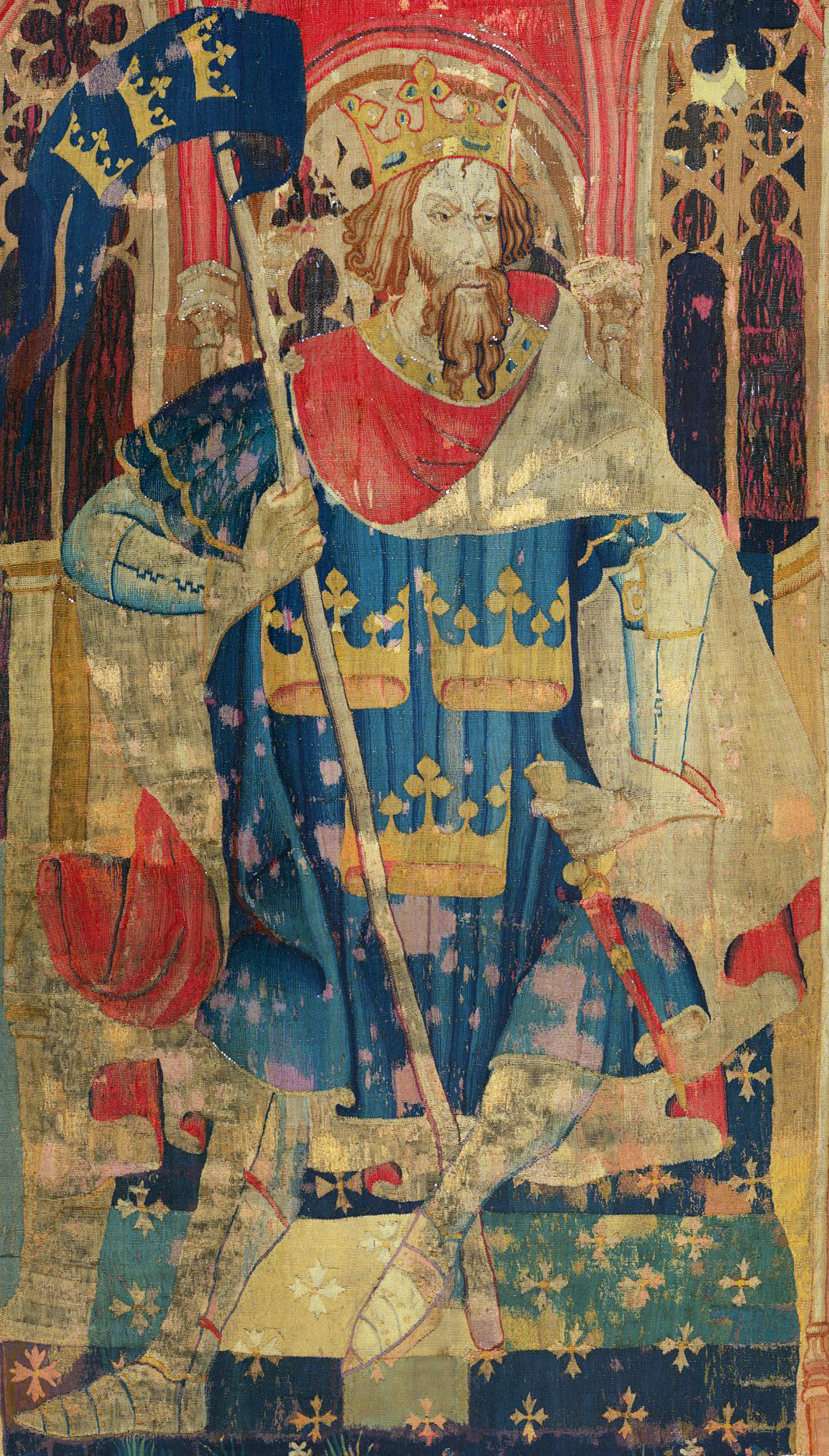
Maybe it's because my family name is "King" that I've always had a fascination with great monarchs. My top three favorites are David (of Judah and Israel), Lear (of Britain), and Arthur (of Britain). What I love is the mythos, the wonder of how a single person can change the shape and direction of a whole people, even of the world. It's also no coincidence that all my favorites are tragic kings, who ultimately failed in their quests. After all, perfect victory over evil and injustice does not lie in this life, but in the next. Christ, the King of kings, died -- not to save us from the cross -- but to save us through it.

It's also no coincidence, then, that my favorite kings are all accused of being legendary rather than historical. I happen to, respectfully, disagree; and I've just finished reading a book which has helped me to articulate why. The book is The Discovery of King Arthur, by Geoffrey Ashe. In it, he notes that historians have tended to ask the wrong question in searching for the "historical" King Arthur:
The historical line of inquiry, pursued with a strict regard for fact, leads to a near-nullity. Yet that is paradoxical. The Arthurian legend is far from being a near-nullity. In its various versions it is a fact itself, a very great fact, one that has survived through the centuries with extraordinary richness and vitality in most of the languages of Europe and America. Far from being pruned away, it needs to be drawn back into the investigation. The Arthur question is literary rather than historical. The proper question is to ask, not 'Did Arthur exist?' but 'How did the legend originate, what realities is it rooted in, what was its starting point?'
In other words, the historians have neglected to regard as sufficiently historical evidence the very documents which occasioned their question in the first place. (I could note that a similar fallacy seems to pervade Biblical studies, especially of the New Testament; but, not being a Biblical scholar myself, I shall refrain.)

Yet, whatever its virtues and arguments in historiography, that is, the theory of doing history, Ashe's book points out another theme in the development of Arthurian legend: the longing for a hero.

As Ashe presents it, the character of Arthur originated as a restitutor, or restorer, figure -- a kind of messiah. In the Roman Empire of the fourth century A.D., of which much of Great Britain was a part, the emperors attempted to reclaim the empire's former glory in the face of growing threats from barbarians and in the aftermath of massive internal crises. Needless to say, none truly succeeded, and Rome itself was sacked in 410 -- the first of many such victories by various barbarian peoples. The citizens of the empire asked how and why this happened, and how their honor could be restored. St. Augustine wrote one of his most famous treatises, The City of God, to answer this very question. His answer was that Jesus was the longed-for restorer, and that his kingdom was not of this world. But that failed to satisfy the longing for victory and honor now.

In the first "complete" biography of King Arthur, Geoffrey of Monmouth's History of the Kings of Britain, portrays him as first a defender of the Britons against the invading Saxons, Angles, and Jutes; then as a campaigner in what today is France against the Roman Empire. In other words, Arthur is a sort of British restitutor. Ashe's argument is founded on finding a historical basis for such a British figure, whether attached directly to the name "Arthur" or not.

But perhaps a greater theme is the persistence of the messianic longing which Ashe points out. England (ironically named for the Angles that Arthur fought) awaits a hero, Arthur returned, to save them in their time of need; and several English monarchs have adopted the Arthurian aura to legitimate their rule. Nor is America immune from such a longing. After all, we have legends surrounding General and President George Washington, President Abraham Lincoln, and even President Theodore Roosevelt -- not to mention the explicit Arthurian metaphors applied to President Kennedy. And witness the fervor of expectation surrounding President Obama's election, and the disappointment in many that the world did not change suddenly upon his inauguration.

In my own life, I find that I tend to waffle between fantasies of becoming just such a world-restoring hero, (especially after watching an action movie or some such thing,) and fantasies of having all my troubles solved by such a hero, (even if the hero who saves me is also the damsel in distress whom I rescue!) As one of my therapists challenged me, I have yet to learn to be a "mere mortal."

Now, I think there really is something to the first fantasy: life is full of challenges and adventures which, to the outsider, may appear mundane but in fact are calls for courage and heroism. Not all of us will have epic poems composed in our honor, but all of us have opportunities -- perhaps more than we would like -- to demonstrate heroic virtue. The danger is to pursue the honor more than the virtue.

It is the second fantasy that, for myself at least, I am most wary. The persistent desire for someone else to take care of my problems, to make everything perfect, with no effort expended on my own part -- in short, the vice of sloth -- remains my primary temptation. As I said before, perfect victory over evil is not for this life. I have no ground to condemn the imperfection of anyone else's achievement, much less to refrain from myself attempting some good, simply because it will not be perfect. This life is not for perfect. This life is for tragedy -- but tragedy which leads to perfect joy in the one true restitutor: Christ.

Rabbert blathers on....

09 September 2009

More Chestertonian stuff

I'm reading Chesterton's 1910 classic, What's Wrong with the World. So far, it is (as one expects from Chesterton) a very witty retort to common misconceptions of his age, often turning platitudes on their heads. But also, (as one expects from Chesterton,) many of his points remain just as sharp today as they were a century ago. For example:
But the difference between the two mental methods [of dogma and prejudice] is marked and unmistakable. The essential of the difference is this: that prejudices are divergent, whereas creeds are always in collision. Believers bump into each other; whereas bigots keep out of each other's way. A creed is a collective thing, and even its sins are sociable. A prejudice is a private thing, and even its tolerance is misanthropic. So it is with our existing divisions. They keep out of each other's way; the Tory paper and the Radical paper do not answer each other; they ignore each other. Genuine controversy, fair cut and thrust before a common audience, has become in our special epoch very rare. For the sincere controversialist is above all things a good listener. The really burning enthusiast never interrupts; he listens to the enemy's arguments as eagerly as a spy would listen to the enemy's arrangements. But if you attempt an actual argument with a modern paper of opposite politics, you will find that no medium is admitted between violence and evasion. You will have no answer except slanging or silence. A modern editor must not have that eager ear that goes with the honest tongue. He may be deaf and silent; and that is called dignity. Or he may be deaf and noisy; and that is called slashing journalism. In neither case is there any controversy; for the whole object of modern party combatants is to charge out of earshot.

In our current culture, it is almost impossible to avoid the Scylla of relativism without falling into the Charybdis of prejudice. That is, either one denies any real difference between one's opponents and oneself, or one judges them to be irrational and arguing in bad faith.

For example, I pointed out to a friend that, while health care of some sort is presented as a basic human right in Catholic social teaching, there is no requirement or expectation that the government will in any direct way provide such care. Rather, the role of the government is to ensure that health care is not denied to any who need it. His immediate response was to call me insane. No reasonable person, he said, could call for universal health care without at the same time making it a government department. In short, he was unable to actually make an argument in favor of government-run health care exactly because he could not accept any argument against it.

I don't know what it would take for our society to discover some other mode of debate besides shouting as loudly as possible, but until we do we will drown in our own increasing irrational prejudices.

Rabbert blathers on....

17 August 2009

Democracy and the common good

The "common good" is one of those concepts that is so plain and obvious that it outwits our attempts to define it -- or at least, outwits my attempts. But I have stumbled upon a particularly clear definition from G.K. Chesterton, in his 1909 book Orthodoxy (Ch. IV):
The first [principle of democracy] is this: that the things common to all men are more important than the things peculiar to any men. Ordinary things are more valuable than extraordinary things; nay, they are more extraordinary. Man is something more awful than men; something more strange. The sense of the miracle of humanity itself should be always more vivid to us than any marvels of power, intellect, art, or civilization. The mere man on two legs, as such, should be felt as something more heartbreaking than any music and more startling than any caricature. Death is more tragic even than death by starvation. Having a nose is more comic even than having a Norman nose.

This is the first principle of democracy: that the essential things in men are the things they hold in common, not the things they hold separately. And the second principle is merely this: that the political instinct or desire is one of these things which they hold in common. Falling in love is more poetical than dropping into poetry. The democratic contention is that government (helping to rule the tribe) is a thing like falling in love, and not a thing like dropping into poetry. It is not something analogous to playing the church organ, painting on vellum, discovering the North Pole (that insidious habit), looping the loop, being Astronomer Royal, and so on. For these things we do not wish a man to do at all unless he does them well. It is, on the contrary, a thing analogous to writing one's own love-letters or blowing one's own nose. These things we want a man to do for himself, even if he does them badly. I am not here arguing the truth of any of these conceptions; I know that some moderns are asking to have their wives chosen by scientists, and they may soon be asking, for all I know, to have their noses blown by nurses. I merely say that mankind does recognize these universal human functions, and that democracy classes government among them. In short, the democratic faith is this: that the most terribly important things must be left to ordinary men themselves--the mating of the sexes, the rearing of the young, the laws of the state. This is democracy; and in this I have always believed.

[Crossposted at The Good, the True, the Just.]

Rabbert blathers on....

04 August 2009

The logic of gifts

Way back in 1980, before I was even fully aware of my surroundings, Pope John Paul II published an encyclical titled Dives in misericordia, or Rich in Mercy. Some time in the mid- to late-nineties, I finally read it, and discovered something that confused me greatly: JP2 said that justice was incomplete, insufficient, and inhumane without mercy.

This was confusing to me because I thought, as many of my friends did, that mercy was something that overrode and (in a way) contradicted justice.

It's now many years later, and I've just finished reading Pope Benedict XVI's new encyclical, Caritas in veritate, or Love in Truth. Pope Benedict says something very similar, that justice and charity are intimately connected, and that justice is false without charitable love. In fact, he implies that charity is actually the foundation for justice.

He explains this by focusing on one central aspect of charity, of love: giving a gift. It seems that justice, which is a relationship in which someone owes something to someone else, is always a result of a gift, a free act which establishes or alters a relationship.

That's kind of abstract. Let me give a few examples.

Let's look at babys. It's hard to deny that parents owe their children the sustenance and support needed to grow to adulthood. Children have a right to such things as food, clothing, shelter, education, and so on. Parents who do not adequately provide such things for their children are called "child abusers" and are subject to legal coercion. And yet, what has the baby done to "deserve" these rights, to essentially put his/her parents in debt to him/her? Nothing -- except to receive the gift of life which those parents freely gave to him/her.

Okay, so some might object that parents are not perfectly free in bringing a child into the world, for a variety of reasons. I will not argue that point just now. But what about a couple who marry each other? Surely there is no constraint or obligation on either toward the other. No one can make me marry anyone in particular, nor force me to marry at all. However, once the spouses do marry, they discover that they are obliged to one another. Infidelity, to take the most obvious example, is (among other things) unjust to the spouse. It's a matter of justice: a wife has a right to demand faithfulness from her husband; and vice versa. Even though the law continues to distance itself from spousal obligations, we still recognize that an unfaithful husband does wrong to his wife.

Well, maybe some kinds of justice are based on a gift, but are all forms of justice? Well, let's take the example of a worker who is offered a job. Here is an exchange of gifts with different kinds of freedom on each side. Sure, the employer needs workers to do business, and the worker needs income to support him-/herself; but neither is under any constraint or obligation to arrange for this particular person to be given this particular job under these particular arrangements. There is a sense in which a worker's agreement to do the work and the employer's agreement to compensate the worker is an exchange of gifts, because each is free in offering something to the other. But based on this exchange of gifts, real issues of justice arise: a worker who does not fulfill his/her obligations, or an employer who does not properly compensate his/her workers, wrongs them.

What about criminal justice? Is there a gift involved at the foundation of rights to property or safety? Isn't the city, or the state, or the nation, obliged to provide protection for these things? This may be a bit more subtle, but here is where B16 provides an insightful perspective: gifts not only require the freedom of the giver, they also require, perhaps even more so, the incapacity of the receiver to make, or take, or require the gift. So, my capacity for health or safety or ownership of things is not something I can acquire for myself. It is not something I can earn or "deserve". I cannot give myself life; all I can do is take care of the life I have, and protect it. I cannot give myself intelligence or freedom or the other faculties needed to own property or interact socially; all I can do is use the abilities -- often explicitly called "gifts" -- I have to live in society. We do not make property or health or safety; we only use and take care of what we receive as given to us.

As St. Paul asks, "What do you have that you did not receive?" The answer, literally, is: nothing.

It is only after we have received what we have not made and have not earned that we can speak of justice, of what is due or owed, of rights and responsibilities. Of all the many profound insights of this encyclical, the logic of gifts is what has struck me most deeply.

Rabbert blathers on....

11 July 2009

Recent Reading: Josef Pieper's The Four Cardinal Virtues

This morning I finished reading The Four Cardinal Virtues for the third or fourth time. It's most definitely worth reading and re-reading.

This volume is a collection of four separate essays Pieper wrote between 1954 and 1959; but they fit together very well because each of them explains Thomas Aquinas' thought on one of the virtues, and brings it into the context of the twentieth century world. Pieper's understanding, not only of history and philosophy, but of the world he lives in, make his observations timely even in the early days of the twenty-first century.

So, what are the four cardinal virtues? I'm glad you asked. They are, in the traditional order:
  1. Prudence
  2. Justice
  3. Fortitude (aka Courage)
  4. Temperance
The adjective "cardinal" derives from the Latin word cardo, which literally means "hinge" but figuratively is the center-point around which other things turn or spin. These four virtues form the center-point of the good life.

And what is the pin that holds this hinge together? Pieper shows that the common feature of all four virtues is connection with reality. So, Prudence is the virtue of recognizing and understanding reality as it truly is; Justice is that understanding put into action, acting in line with what is real; Fortitude resists external pressures to depart from reality; and Temperance removes internal obstacles to living in accordance with reality.

He examines the virtues from a philosophical standpoint, showing how the cardinal virtues relate to each other and how other virtues or acts relate to them. But he also shows the connection of these "philosophical" or "natural" virtues with the theological virtues of Faith, Hope, and Love. (Indeed, another volume collects his essays on those three virtues.) He notes that a full understanding of and relation to the real world includes relating to the God who created the world. Coming from the Catholic tradition, of course, he assumes the revelation of Jesus Christ; but his point is as clear to a Muslim or Hindu or atheist. The religious questions really do matter, even to aspects of life which at first blush appear "secular" or "natural". Because, ultimately, if nature was created by God, then "supernature" is intimately connected to "nature", and we cannot fully deal with one without at least acknowledging the other.

Rabbert blathers on....