Showing posts with label Reviews. Show all posts

05 December 2009

Monk finale

Just reprinting my semi-review, semi-reflection on the Monk finale from Virtue Quest:
I’ve been watching “Monk” with my family for some time, and we all gathered around the tele last night for the series finale.

For those who don’t watch much TV, the show follows Adrian Monk (played by Tony Shalhoub), a former detective for the San Francisco Police whose OCD went into overdrive when he lost his wife twelve years ago. He’s been consulting with the department, because he has an uncanny insight into what “doesn’t fit” at a crime scene. Mostly, it’s a comedy hung loosely on a detective show with the running gag of how to set off Monk’s phobias or obsessions. Sort of an anti-Columbo.

The one case he’s never solved is his own wife’s murder. So, of course, the series had to end with the solution to this cold case. As with most episodes, the actual clues and mystery-solving aspect of the story are mostly incidental. The resolution is quick and neatly resolved. It’s all about the character quirks. But it surprised me by showing a dark side of Monk’s character that I did not at all expect from a normally light entertainment.

* * * Spoilers to follow! * * *

Monk has always been haunted by his inability to solve his wife’s murder, but when he discovers the killer’s identity, he has two very dark reactions: he grows vengeful, and he implies that his OCD derives from an inability to “breathe the same air” as Trudy’s killer.

Vengeance and Justice


You knew this had to get back to virtue at some point, didn’t you?

Justice is the act of giving to each person their due. This is obviously the principle behind civil justice: I sue someone who refuses to give me what they owe me. But it’s also the case in criminal justice. In committing a crime, the criminal owes the victim what belongs to them; and, a little less obviously but just as truly, the criminal “is due” the consequences and punishment that belong to the crime.

Vengeance, on the other hand, is the simple desire to harm someone who has harmed me. It belongs to the “misery loves company” class of motivations. Vengeance says, “I have suffered, and I want that person to suffer at least as much – maybe even more!” It’s not interested in restoring order or right; just in causing hurt.

Monk’s vengeful turn


Now, throughout the series, Monk has consistently sided with justice over vengeance. But then, he’s also consistently made an exception to all reason and logic wherever his wife was concerned. Even so, in a previous episode he was not willing to kill the person who planted the bomb that killed Trudy.

So I was surprised to see him, not only asking Stottlemeyer (Ted Levine) to kill the suspect without a trial, but actually stealing a gun and apparently threatening to kill the suspect himself. I was also surprised that he had no reaction other than “emptiness” that the suspect committed suicide.

If the show was willing to go into that area of wrath and revenge, I would have hoped that they would, well, do the topic justice. Show Monk struggle with his desire for revenge, his regret that he didn’t pull the trigger himself, and so on.

I also had hoped that, having set up that Monk didn’t want to “breathe the same air” that Trudy’s killer breathed, they might have resolved that with some idea of the world being “cleaner” now. But maybe there I’m reading more into the statement than it warrants.

Character welcome


Now, I know all too well that Monk is just a fun diversion, and is not intended to be high art or profound literature. Even so, I do wish it would reach a little higher – especially in episodes where it delves into some deeper aspect of a character. Frankly, I think any show is more entertaining – more funny, more exciting, more romantic, what have you – when it reflects the fullness of human life and motivation.

Monk’s series finale left me, unfortunately, with a rather flat character whom I just didn’t believe in anymore, much less care about or identify with.

Ah well. That leaves more time for my own writing.

Rabbert blathers on....

09 November 2009

Behold the true Jedi masters

I've been told that there are some who hate the movie, "The Men who Stare at Goats". I'd like to meet them. I'd like to know what there is to hate about this movie.

Now, I'll grant you that it's no "Casablanca". It's no "Eternal Sunshine of the Spotless Mind". But it's a movie that I certainly wish George Lucas had made instead of "The Phandom Menace" and "Attack of the Clowns".

It is a journey, if not into a larger world, at least into a stranger one. "Inspired by" rather than "based on" the book of the same title by Jon Ronson, the film follows the misadventures of Bob Wilton (Ewan McGregor), a small town journalist trying to prove his manliness both to his wife and to himself by attempting to cover the lead-up to war in Iraq in the early 2000s. He runs into Lyn Cassady (George Clooney), a putative salesman but secretly a former member of the New Earth Army.

Now, the New Earth Army was the brainchild of Lt. Col. Bill Django, who thought that the New Age movement would provide the solutions to war and conflict in the world. He sought to create a special forces unit within the U.S. Army that would be in tune with Earth and Nature and would fight battles with psychic powers rather than conventional weapons. They called themselves Jedi Warriors.

At first, Wilton is skeptical. And so was I. But the film presents everything with a perfectly straight face, leaving the viewers to follow where they will. As both the journey through Iraq and the journey through the development of the New Earth Army progresses, the lines between reality and delusion, between belief and insanity begin to blur - yet the lines between good and evil emerge with stark clarity.

I have not read the book, and I have no idea how much of the film is rooted in actual persons or events. I saw it with my dad, who served in Vietnam, and who told me, "That's the kind of [stuff] that really happened." Well, at least with regard to the availability and use of LSD and other drugs.

In short, belly-laughs were frequent, usually occasioned by questions of historical and metaphysical nature. It's the kind of humor I like best: the kind that sends you to a library to learn some more.

Rabbert blathers on....

23 September 2009

Gallup-ing through the church?

It's a commonplace today for people to be "spiritual" without being "religious". By that, most people seem to mean that they are interested in matters of faith and spirituality, but not interested in membership in an institution. My guess is that institutional membership feels like a burden, an obligation. In any case, the result is a steady downward trend in church membership and participation over the past several decades. Even if there are new members entering a community every year, there also are members dropping out.

A program offered by the Gallup Organization -- source of all those Gallup Polls -- promises to reverse those trends, to make the local churches places where people will really connect with the institution and deepen their faith. The program is outlined in the book, Growing an Engaged Church, by Albert L. Winseman. His main thesis is that, contrary to the old wisdom that belonging follows belief, deep belief and growth in faith actually follows as a result of belonging to a living and lively community.

This makes a certain instinctive sense to a Catholic. Unlike many of the Evangelical, Pentecostal, and Emergant approaches to Christianity of recent years, institutional memberships really matters theologically to Catholics: we are baptized into the Body of Christ, not into an individual relationship. But Winseman notes that engagement means much more than mere membership. He proposes four areas in which congregational engagement can be measured:
  • What do I get?
  • What do I give?
  • Do I belong?
  • How can we grow?
These areas, of course, become the basis for a poll which can give statistical measurements of the "health" of a particular congregation. As he puts it,
Measuring engagement, and implementing strategies to improve it, is just like preparing the soil to produce an abundant crop. It is no secret that there are some churches that produce abundant fruit of the Spirit; and there are others that seem as dry as a withered fig tree, bearing no fruit. Increasing engagement in your church is simply employing the latest research and discoveries -- preparing the soil -- so God can produce a bumper crop; it's creating a receptive climate for the work of the Holy Spirit, so God can do great things in your midst.
I have no argument with any of this. Even my parish, which is known in the Archdiocese for being particularly fruitful and lively, recognizes that it is far from being the "good soil" described by our Lord's parable. And I think that the Gallup system does one very good thing that it sets out to do: it tests the soil to see if anything will grow.

Moreover, Winseman suggests three concrete tactics for increasing engagement:
  • Clarify the expectations of membership
  • Help members discover what they do best
  • Create small groups
Again, taking these steps cannot help but improve the relationship between the individual and the institution. The first step alone could solve any number of problems in my parish, where misunderstandings are as rife as anywhere else on the planet.

But what Winseman misses is that it takes more than "good soil" to bear good fruit. In the Gospel parable, as in life, a seed must be sown for a plant to grow. All that the Gallup system really promotes is an atmosphere of strong membership in an institution. It doesn't really provide faith.

Now, as Winseman points out early in his book, faith involves membership in the Church; but membership alone is not a sufficient condition for the growth of faith or of the charity which is faith come to full fruit.

Perhaps this is because faith is not something that can be programmed institutionally. All an institution can do is provide an opportunity for faith, an opportunity for the encounter with Jesus which is the seed of faith. Winseman admits this, but says nothing more about it. He seems to see "preparing the soil" as the only work that we can do, and that everything else is entirely up to God. In short, this approach is entirely about how a particular congregation engages its members, and not at all about why a church seeks to engage anyone.

This is exactly where the seams show. This entire approach to churches is based on a model (called "The Gallup Path") originally designed with business in mind, where the ultimate goal is to increase profit for the company. But a church -- of any faith -- does not exist for the purpose of profit, and its members do not relate to leadership as employees to employer. The goal cannot be assumed, since the content of the goal varies dramatically from one faith to another. Rather, the content of the goal is exactly what divides churches and religions and cultures.

In short, what people are engaged in -- or better, whom they are engaged with -- is at least as important as how they are being engaged, when it comes to religion. And this is something Winseman studiously ignores and even dismisses as not significant.

Now, as I mentioned above, a church can certainly gain from the methods outlined in Growing an Engaged Church. I would simply warn that this book and the Gallup Path is not sufficient in and of itself to bring people to the fullness of life in Christ.

Rabbert blathers on....

14 September 2009

History and heros

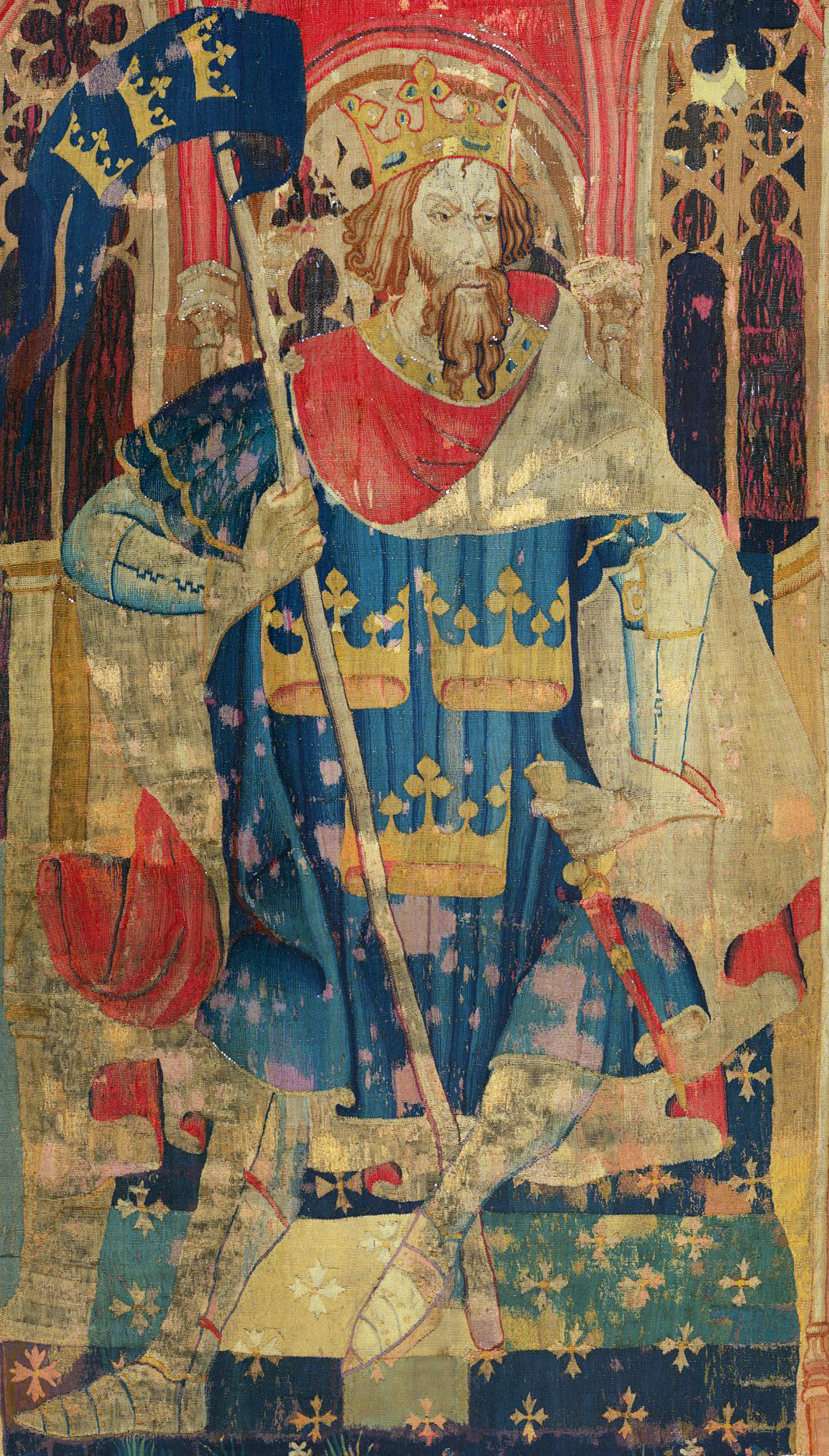
Maybe it's because my family name is "King" that I've always had a fascination with great monarchs. My top three favorites are David (of Judah and Israel), Lear (of Britain), and Arthur (of Britain). What I love is the mythos, the wonder of how a single person can change the shape and direction of a whole people, even of the world. It's also no coincidence that all my favorites are tragic kings, who ultimately failed in their quests. After all, perfect victory over evil and injustice does not lie in this life, but in the next. Christ, the King of kings, died -- not to save us from the cross -- but to save us through it.

It's also no coincidence, then, that my favorite kings are all accused of being legendary rather than historical. I happen to, respectfully, disagree; and I've just finished reading a book which has helped me to articulate why. The book is The Discovery of King Arthur, by Geoffrey Ashe. In it, he notes that historians have tended to ask the wrong question in searching for the "historical" King Arthur:
The historical line of inquiry, pursued with a strict regard for fact, leads to a near-nullity. Yet that is paradoxical. The Arthurian legend is far from being a near-nullity. In its various versions it is a fact itself, a very great fact, one that has survived through the centuries with extraordinary richness and vitality in most of the languages of Europe and America. Far from being pruned away, it needs to be drawn back into the investigation. The Arthur question is literary rather than historical. The proper question is to ask, not 'Did Arthur exist?' but 'How did the legend originate, what realities is it rooted in, what was its starting point?'
In other words, the historians have neglected to regard as sufficiently historical evidence the very documents which occasioned their question in the first place. (I could note that a similar fallacy seems to pervade Biblical studies, especially of the New Testament; but, not being a Biblical scholar myself, I shall refrain.)

Yet, whatever its virtues and arguments in historiography, that is, the theory of doing history, Ashe's book points out another theme in the development of Arthurian legend: the longing for a hero.

As Ashe presents it, the character of Arthur originated as a restitutor, or restorer, figure -- a kind of messiah. In the Roman Empire of the fourth century A.D., of which much of Great Britain was a part, the emperors attempted to reclaim the empire's former glory in the face of growing threats from barbarians and in the aftermath of massive internal crises. Needless to say, none truly succeeded, and Rome itself was sacked in 410 -- the first of many such victories by various barbarian peoples. The citizens of the empire asked how and why this happened, and how their honor could be restored. St. Augustine wrote one of his most famous treatises, The City of God, to answer this very question. His answer was that Jesus was the longed-for restorer, and that his kingdom was not of this world. But that failed to satisfy the longing for victory and honor now.

In the first "complete" biography of King Arthur, Geoffrey of Monmouth's History of the Kings of Britain, portrays him as first a defender of the Britons against the invading Saxons, Angles, and Jutes; then as a campaigner in what today is France against the Roman Empire. In other words, Arthur is a sort of British restitutor. Ashe's argument is founded on finding a historical basis for such a British figure, whether attached directly to the name "Arthur" or not.

But perhaps a greater theme is the persistence of the messianic longing which Ashe points out. England (ironically named for the Angles that Arthur fought) awaits a hero, Arthur returned, to save them in their time of need; and several English monarchs have adopted the Arthurian aura to legitimate their rule. Nor is America immune from such a longing. After all, we have legends surrounding General and President George Washington, President Abraham Lincoln, and even President Theodore Roosevelt -- not to mention the explicit Arthurian metaphors applied to President Kennedy. And witness the fervor of expectation surrounding President Obama's election, and the disappointment in many that the world did not change suddenly upon his inauguration.

In my own life, I find that I tend to waffle between fantasies of becoming just such a world-restoring hero, (especially after watching an action movie or some such thing,) and fantasies of having all my troubles solved by such a hero, (even if the hero who saves me is also the damsel in distress whom I rescue!) As one of my therapists challenged me, I have yet to learn to be a "mere mortal."

Now, I think there really is something to the first fantasy: life is full of challenges and adventures which, to the outsider, may appear mundane but in fact are calls for courage and heroism. Not all of us will have epic poems composed in our honor, but all of us have opportunities -- perhaps more than we would like -- to demonstrate heroic virtue. The danger is to pursue the honor more than the virtue.

It is the second fantasy that, for myself at least, I am most wary. The persistent desire for someone else to take care of my problems, to make everything perfect, with no effort expended on my own part -- in short, the vice of sloth -- remains my primary temptation. As I said before, perfect victory over evil is not for this life. I have no ground to condemn the imperfection of anyone else's achievement, much less to refrain from myself attempting some good, simply because it will not be perfect. This life is not for perfect. This life is for tragedy -- but tragedy which leads to perfect joy in the one true restitutor: Christ.

Rabbert blathers on....

23 July 2009

Perry Hotter and the Bathtub Rinse

I think it may have been a mistake to have read the Harry Potter books before seeing the movies. It's next to impossible to see the film as a work in its own right. I can't help but notice what's missing from the book.

Now, Half-Blood Prince easily wins my top prize among the Harry Potter novels. It reaches more deeply than any of the others into the loves, conflicts, and hopes of the characters. It explores the dynamic of its magical world more fully, and defines the lines of the central conflict between Voldemort and Potter. It even displays a depth of moral discernment not found in the rest of the series.

And I'm afraid that's what I missed from the film. I found myself too busy wondering where the dynamics of relationship and morality were to take more than passing notice at the quality of acting (still improving with each movie; I'm finally accepting Michael Gambon in place of the late Richard Harris) or the flashy special effects (well-executed, but lacking imagination). The film payed passing lip service to the moral questions around Harry's use of the Half-Blood Prince's textbook, and failed entirely to look at the issue of the sectem sempera spell. Regarding Dumbledore, the film portrays only what is needed to keep the action moving, so his role as wise father-figure is lost. Even the jealousy dynamic between Ron and Hermione, and Harry and Ginny, feels perfunctory and tacked-on, whereas in the novel it is at least somewhat integrated into the other moral quandaries the teens face.

Now, I'm not a huge Potter fan. I enjoyed the books, mostly, but on the level of light entertainment rather than as real literature. Rowling has a rightly acknowledged gift for inventive language and playful bits of magic. But her grasp of human nature and morality tends toward the shallow; at her deepest, she merely raises questions rather than truly exploring them. She's no Dostoyevski or Tolkien.

On the other hand, she's no Philip Pullman, either. She's not to blame for the rising popularity of "witchcraft" and occult magic. She's not out to destroy humanity or the Church, and the stories don't even have that unintentional effect -- except that they do ride the tide of popular ideas common in our culture today, such as: intention is the main factor in morality; authority is usually wrong, especially when enforcing rules; victory is ultimately in our own hands; etc.

Still, I did enjoy the movie, and did not wish for my money back. I think I'm hard on Harry because I develop such high hopes -- for characters, for insights, for drama -- and then am disappointed when I find the actual book or film falling short. Perhaps I, like Dumbledore, simply ask too much of Harry.

2hr 33min; Directed by David Yates; rated PG.

Rabbert blathers on....

11 July 2009

Recent Reading: Josef Pieper's The Four Cardinal Virtues

This morning I finished reading The Four Cardinal Virtues for the third or fourth time. It's most definitely worth reading and re-reading.

This volume is a collection of four separate essays Pieper wrote between 1954 and 1959; but they fit together very well because each of them explains Thomas Aquinas' thought on one of the virtues, and brings it into the context of the twentieth century world. Pieper's understanding, not only of history and philosophy, but of the world he lives in, make his observations timely even in the early days of the twenty-first century.

So, what are the four cardinal virtues? I'm glad you asked. They are, in the traditional order:
  1. Prudence
  2. Justice
  3. Fortitude (aka Courage)
  4. Temperance
The adjective "cardinal" derives from the Latin word cardo, which literally means "hinge" but figuratively is the center-point around which other things turn or spin. These four virtues form the center-point of the good life.

And what is the pin that holds this hinge together? Pieper shows that the common feature of all four virtues is connection with reality. So, Prudence is the virtue of recognizing and understanding reality as it truly is; Justice is that understanding put into action, acting in line with what is real; Fortitude resists external pressures to depart from reality; and Temperance removes internal obstacles to living in accordance with reality.

He examines the virtues from a philosophical standpoint, showing how the cardinal virtues relate to each other and how other virtues or acts relate to them. But he also shows the connection of these "philosophical" or "natural" virtues with the theological virtues of Faith, Hope, and Love. (Indeed, another volume collects his essays on those three virtues.) He notes that a full understanding of and relation to the real world includes relating to the God who created the world. Coming from the Catholic tradition, of course, he assumes the revelation of Jesus Christ; but his point is as clear to a Muslim or Hindu or atheist. The religious questions really do matter, even to aspects of life which at first blush appear "secular" or "natural". Because, ultimately, if nature was created by God, then "supernature" is intimately connected to "nature", and we cannot fully deal with one without at least acknowledging the other.

Rabbert blathers on....

28 June 2009

Free movies: Dead Again

On Hulu: Dead Again is the film that first made me fall in love with Emma Thompson and Kenneth Branaugh. Their personal lives have been something of a disappointment, but this film shows the amazing chemistry they had, and Branaugh's talents as a director. Rated R for violence, I suppose.
Rabbert blathers on....

30 May 2009

Rabbert Reviews: Up with "Up"!

DugI've rarely had the combination of free time, good company, and ready cash to go see films on opening weekend. But the stars aligned and I found myself sitting in a packed theater this evening for a showing of "Up", presented in 3D no less.

Now, I have long been a Pixar fan, mainly because the studio puts at least as much emphasis on crafting a story as they do on pushing the technological limits of CGA. Still, when I saw the teasers for this film, I wondered if even Pixar could make a story about an old man and a flying house anything more than a gimick.

I should have known better than to doubt. Indeed, "Up" shed light on my own assumptions about what makes a story engaging or an adventure exciting. I fall too easily into the cultural trap of thinking that adventure is a game for the young, that the interesting parts of older people's lives lie in the past. But "Up" posits that the more we cling to the past and the more we tighten our grip on youth, the more opportunities for life and love will slip through our fingers.

Indeed, this is the first time in recent memory that I've seen a film in which the wisdom of the older generation is portrayed realistically: far from infallible and often stuck in the past, but also full of experience and common sense, forming a valuable foundation for life. He hands on what he has learned, even if he has trouble letting go of the lesson. Meanwhile, the child picks up bits and pieces of the wisdom provided, as kids are wont to do.

Compared with "Gran Torino", Clint Eastwood's recent meditation on a similar topic, "Up" offers a lighter and therefore more true-to-life take on the relationship between the generations. Melodrama rarely enters real life; more often, I find myself in a strange mix of the bizarrely silly and the profoundly personal. "Up" walks this tightrope of for-the-fun-of-it frivolity (watch and listen for the gratuitous Star Wars homages) and moral discernment with near-perfect balance. Moreover, the voice performances are spot-on, and the writing hits a surprisingly archetypal note.

My solitary critique is that the 3D didn't add much to the story being told. But perhaps that's my typical insensitivity to special effects and spectacle.

Simply put, "Up" announces the presence of adventure in everyday life.

Rabbert blathers on....