11 July 2009

Recent Reading: Josef Pieper's The Four Cardinal Virtues

This morning I finished reading The Four Cardinal Virtues for the third or fourth time. It's most definitely worth reading and re-reading.

This volume is a collection of four separate essays Pieper wrote between 1954 and 1959; but they fit together very well because each of them explains Thomas Aquinas' thought on one of the virtues, and brings it into the context of the twentieth century world. Pieper's understanding, not only of history and philosophy, but of the world he lives in, make his observations timely even in the early days of the twenty-first century.

So, what are the four cardinal virtues? I'm glad you asked. They are, in the traditional order:
  1. Prudence
  2. Justice
  3. Fortitude (aka Courage)
  4. Temperance
The adjective "cardinal" derives from the Latin word cardo, which literally means "hinge" but figuratively is the center-point around which other things turn or spin. These four virtues form the center-point of the good life.

And what is the pin that holds this hinge together? Pieper shows that the common feature of all four virtues is connection with reality. So, Prudence is the virtue of recognizing and understanding reality as it truly is; Justice is that understanding put into action, acting in line with what is real; Fortitude resists external pressures to depart from reality; and Temperance removes internal obstacles to living in accordance with reality.

He examines the virtues from a philosophical standpoint, showing how the cardinal virtues relate to each other and how other virtues or acts relate to them. But he also shows the connection of these "philosophical" or "natural" virtues with the theological virtues of Faith, Hope, and Love. (Indeed, another volume collects his essays on those three virtues.) He notes that a full understanding of and relation to the real world includes relating to the God who created the world. Coming from the Catholic tradition, of course, he assumes the revelation of Jesus Christ; but his point is as clear to a Muslim or Hindu or atheist. The religious questions really do matter, even to aspects of life which at first blush appear "secular" or "natural". Because, ultimately, if nature was created by God, then "supernature" is intimately connected to "nature", and we cannot fully deal with one without at least acknowledging the other.

Rabbert blathers on....

09 July 2009

The coersive, pervasive, unavoidable propaganda engines of the Vatican

Yes, the Vatican, which controls all media outlets everywhere and directly controls the minds of its slobbering zombie subjects via microchips implanted in what's left of their brains ...

... somehow failed to make a big splash in announcing the Pope's new encyclical, Caritas in veritate.

I'll let you know what I think of it once I've read it.
Rabbert blathers on....

07 July 2009

Ah... Facebook

Yes, I have a Facebook page. And I've been cross-posting this blog over there. And I've been getting some good comments over there -- but they're not really publicly accessible.

My main goal with this blog is to spark conversation. So, if you happen to know me via Facebook, please post your comments here on the blog rather than on the FB page. (I know, it's another click or two!) It's worth doing because it opens the conversation to a broader public.

Mucho danke.
Rabbert blathers on....

This Christopher West dude

This evening, my local parish is hosting Christopher West for a talk. I had dinner last night with a couple friends who attended a week-long workshop with West about a year ago, and they were raving about him. I myself have been rather ambivalent about West: his presentation style doesn't suit my personality, and I have some quibbles with his approach to theology; but I think he's done a great job of bringing the Church's teaching on sexuality to a broader audience. So I'm very much looking forward to seeing him in person and perhaps clarifying some of the questions I have.

I'll let y'all know how it goes!
Rabbert blathers on....

04 July 2009

Obligatory Independence Day post

I was born in the United States of America, and I have reaped untold benefits from my education, my economic situation, and the political liberties that come with life in the U.S.A. I therefore love my country out of duty.

I know that I will make few friends in saying that, but I consider honesty to be among the highest of duties, and closely connected to the duty of patriotism. True patriotism is not, after all, "my country, right or wrong." True patriotism is a kind of piety: it is the duty of gratitude and honor we owe to those who have given us gifts we cannot repay. It is the love and respect we give to our parents and our country and our benefactors.

But just as it does not honor our parents to lie to them about their errors or wrongs, or to support them in any depraved action they might take, it does not honor our country to pretend that she is "the greatest nation on earth" or "the land of the free and the home of the brave."

The United States of America, more than any other nation I'm aware of (possibly excepting Imperial Rome, Nazi Germany, and the U.S.S.R.), portrays itself as a moral power as much or even more than it is a political or economic or military power. We proclaim "the American way of life" and "the American dream" as if these are the highest of human aspirations.

But it does this country no honor to ignore the millions of our own citizens killed by abortion; the thousands of foreign nationals detained against our own law and international treaty; the hundreds or more people, both U.S. citizens and foreigners, subjected to the very tortures for which the U.S. prosecuted other nations; nor the slavish relationship between government and business which treats citizens as mere consumers or producers, mere economic units, rather than uniquely valuable persons.

So I cannot muster any personal affection for my country, for my homeland. But I can and will love it as best I am able, by speaking what truth I can in whatever small way I am able. And I will pray night and day for the growth of truth and virtue among her leaders and among her citizens. May God indeed bless America.
Rabbert blathers on....

Did I mention...?

... that I'm discerning a call to religious life?

Which is why a chum of mine forwarded a NY Times article on nuns in the U.S. to me. We've been having a fascinating email conversation about what's wrong with Catholic religious orders in the U.S., and then it occurred to me: isn't that why I have a blog? So that I can state my own half-crazed views on what's wrong with the world and how it should be fixed?

But of course! So, from my lofty perch upon my soapbox, I herewith begin my rant. (Warning: Churchspeak ahead!)

First off, as to why this scrutiny is directed at women religious rather than men: there are a number of reasons, some of which are historical and fairly arbitrary, and others of which are historical and theologically significant. But I think the main reason is historical and bluntly practical: most men's religious orders, whether they started this way or not, have become in the past couple centuries essentially communities of ordained priests. So, being in Holy Orders as well as in religious vows, they are under an additional structure of authority. They have to answer, not only to their religious superior and to the head of the congregation for religious, but also to their local bishop and to the head of the congregation for clergy. And let me tell you, the congregation for clergy gets involved at the local level a lot more than the congregation for religious. Anyway, this means that men religious, for the most part, have more checks to keep them in the straight and narrow, and also undergo this kind of scrutiny on a far more regular basis than the women religious. In short, it's just not news when it happens with the guys.

What makes this of personal interest to me is that, so far as I can tell, I'm not called to the priesthood. So I'm looking at religious life, but not at being ordained. And this is where my chum comes into the picture. He notes that the core of many religious communities was service to some part of the Church, such as serving priests or serving Church institutions. After the Second Vatican Council, the emphasis shifted to serving the world rather than serving the Church. But, as my friend notes, this came across as saying that serving the Church was somehow bad.
Along with the notion that service was somehow bad came the concomitant notion that those serving others had been oppressed [by those they served], and must rise up and throw off their oppressors.
So the Church herself began to be viewed as oppressive, and serving the Church appeared to be undignified, at best.

And yet, service is what we're all about as Catholics. Serving the world is the way we grow closer to God, whose Son came to serve us. So the question for any Catholic, lay or ordained or consecrated, ought not to be, "How can I avoid the indignity of serving?" but, "Whom am I called to serve, and how can I best serve them?"

My friend made five suggestions. I'll repeat them here, with my comments in red.
We need to re-establish a few things with modern religious communities [And, I would add, bishops and really all Catholics]:
1. It's OK to have a mission that doesn't involve service to the clergy. But every mission involves service to Christ and to his people.
2. It's also OK to have a mission of service -- yes, even to clergy. [After all, clergy are people too, and they need help as much as anyone else!]
3. Catholic religious orders [and all Catholics] need a Catholic identity. [Otherwise, why be Catholic? Why not just be a social service organization?]
4. Mission statements need to be simplified or thrown out on their ear. [And any mission statement must reflect the mission of Christ, else see #3.]
5. Religious orders offer a way of life that cannot be found in "the world." It's not to say they are better, but to point out that theirs is a different way of life. Put simply, quit throwing out the habits and pretending you're like everyone else, because you are not. If you are like everyone else, what's the point?


I have more to say about my own thoughts on the future of religious life, and on my own discernment, but they'll have to wait for another post. This one has grown too long already.

Rabbert blathers on....

03 July 2009

Underpants theology

I am a member of an elite class of highly intelligent people who are fans of "Pearls Before Swine". Unfortunately for me, the local paper doesn't carry this critical item. However, I have wonderful friends who forward to me notable episodes, such as the following:
Pearls Before Swine
Now, having studied a bit of both philosophy (loving a chick named Sophie) and theology (THE-ology, or THE science), I have to agree with Goat that, whatever support Pig may have, it is not support for his theology.
Rabbert blathers on....

More sex talk

I've noticed a number of espresso stands in my neighborhood springing up advertising "sexy barristas!" and staffed by scantily clad women. I'm talking pasties scanty. Predictably, the cars line up on weekday mornings, leaving the Starbucks across the street empty. But if I were to object to this business model, do you think I'd be welcomed as a model of virtue? I fear I'd be pooh-poohed as a prudish Victorian throwback.

And I thought we men were supposed to treat women as persons rather than as sex objects. Silly me.

I'm currently reading The Four Cardinal Virtues, by Josef Pieper (a German, but one who writes remarkably clearly nonetheless!) He noted, in 1954, that in the current "state of affairs,"
in contradiction to the true grading and order of things, the realm of sex ... has moved to the center of attention in the general moral consciousness. In addition to this, and despite all contrary statements of principle, a smoldering subterranean Manichaeism casts suspicion on everything pertaining to physical reproduction as being somehow impure, defiling, and beneath the true dignity of man.
He goes on to note that the pleasure and instinctive urge for sexual intercourse is -- and has always been considered in the Catholic tradition -- good and noble, partly because pleasure is a good in itself but largely because it is intimately connected to one of the greatest goods that human beings can accomplish: the introduction of children into the world.

On the other hand, I can't help but notice the common thread that runs through all the sexual "liberties" that people clamor for today: a disregard for or outright enmity toward children. Sex outside of marriage risks bringing children into a difficult or dangerous situation at the most vulnerable time of their lives. Contraception, masturbation, pornography, etc. all attempt to separate the pleasure of sexual intercourse from what Pieper calls "the intrinsic purpose of sexual power": procreation.

I know that some will object that sex is about much more than having babies, and that not every act of sexual intercourse necessarily results in the birth of a child. Granted. But this is no reason to excise children from the realm of sex altogether. I could just as truly say that not every act of sexual intercourse is physically pleasurable, or emotionally satisfying. Is it fair then to say that pleasure and emotions have no place in the sexual realm?

I think it's only because various voices in western culture have been trying to separate the inseparable for the past couple centuries that sex "has moved to the center of attention in the general moral consciousness." Denial leads to untruth leads to lies to cover the untruth leads to grasping for any kind of cover to keep from facing what one is denying. As Frank Herbert noted in a different context, a culture that talks too much about how it values peace must have a long experience of war. Our culture, which promotes sexual "expression" as one of the highest goods, is in reality attempting to cover up our decades of self-abuse.

Rabbert blathers on....

28 June 2009

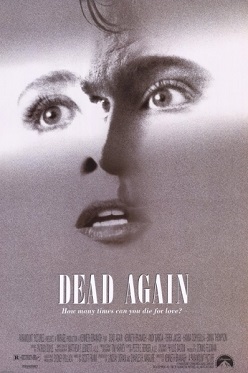
Free movies: Dead Again

On Hulu: Dead Again is the film that first made me fall in love with Emma Thompson and Kenneth Branaugh. Their personal lives have been something of a disappointment, but this film shows the amazing chemistry they had, and Branaugh's talents as a director. Rated R for violence, I suppose.
Rabbert blathers on....

Let's talk about sex

I'll admit it: I'm just plain confused about sex.

I mean, people want the Church and the Government to stay out of their bedrooms, but they also want public recognition and protection for their sexual behaviors, such as lower ages of consent, free access to condoms and other contraception, and so on. The phrase "comprehensive sex education" seems to mean "focusing on contraception rather than the full workings human reproduction." I think the best example is the desire to get married, and also insisting on the right of no-fault divorce. (To those who see the same-sex marriage movement as a huge threat to marriage, I say: we haven't had that spirit here since 1969.) Honestly, I'm not quite sure what the point of marriage is when fornication is widely accepted or even encouraged, and divorce is an easy option at any time.

I'm also confused because friends of mine seem to want to keep their sex lives private, but at the same time want to define themselves according to their sexual behavior. This is most obvious in the "gay rights" movement, in which "coming out" is a sort of defining moment in a person's life: it's a public declaration of what someone does in his or her private life, which no one has a right to know or question, but which everyone must publicly acknowledge and support. It just seems kind of schizophrenic to me.

This has come home to me personally in recent days. I'm a Roman Catholic, and do my best to keep the moral teaching of the Church, i.e., sexual intercourse and behaviors belong within the marital relationship without exception. I'm not perfect, but I also make no excuses for my failures and I do my best to change my habits and behavior. Since college days, I've had lots of friends -- sometimes my closest friends -- who in one way or another have believed or acted differently from the Catholic teachings. Sometimes we'd talk about it, sometimes not. It didn't seem a big deal to me, not really my business.

But in the past year or so, I've had to face a number of people on exactly this issue. Some are people in active sexual relationships outside of marriage who nonetheless receive -- and even distribute -- communion in church. Some are people who are entering into marriage (or domestic partnerships) with unreliable people or for unwise reasons. I've heard of (though not witnessed myself) priests who advise couples to "try each other out" before marriage, or to explore same-sex attractions by engaging in same-sex intercourse.

More often than people in such situations come to me directly, mutual friends approach me to talk about them. It's hard to draw the line between commiserating or sharing advice and gossip in such situations. That's why I'm being so vague about persons and situations. But they ask me what to do, and they say things like, "We can't just talk to them about it." I reply, "Why not?" And they say, "But it's private." In other words, the "private" and "public" aspects of sex and marriage are interfering with each other, and are as confusing for other people as they are for me.

I don't have any final answers, of course. I don't advocate creating an equal sign between Roman Catholic teaching and U.S. law. At the same time, I believe that there is a natural law that describes the proper role of human sexual expression, and that should be reflected in the civil laws of every nation. I think it's no coincidence that every human culture has some kind of marital customs and regulations.

But I would begin by bringing the whole sex discussion out of the shadows. Let's talk about sex without euphemisms. Let's really look at what is public and what is private about sexual relationships, and why. It amazes me, for example, that in a class on fertility awareness methods, engaged couples should be so squeamish about diagrams of the genital organs, or of words like "cervix". I thought our culture was supposed to have been sexually "liberated"! And yet, one friend told me that she learned more about her own reproductive system from the introduction to a book on Natural Family Planning than she had from all the health and biology classes she'd taken in high school and college. That's a sign that we're not really talking about sex in a way that's accessible to all and freeing for the human person. If we want sexual liberation, I suggest we start with a self-critique of our own contradictions. I suggest that with sex, as with every other area of our lives, we begin with a clear understanding of reality.

Rabbert blathers on....

25 June 2009

Icons and ikons


Today saw the passing into the netherworld of Michael Jackson and Farrah Fawcett. May God grant eternal rest to them, and let his perpetual light shine upon them. May they, and all the faithful departed, through the mercy of God, rest in peace.


I was not really a fan of either, though I loved Charlie's Angels in syndication as a kid, and cannot imagine a world without Jackson's music. They both, each in his/her own way, defined a time in history by stepping beyond what was thought to be possible. Today, Fawcett's trademark hair is considered a prime example of camp, and Jackson's signature dance moves inspire as much mockery as nostalgia; but at the time, they set these people apart as belonging almost to another world, to a stellar Olympian realm which graced us mere mortals with glimpses of transcendent glory.

In this way, they played a quasi-religious role in American and even global culture. They became a window through which we viewed the heavenly realms -- even if those heavenly realms are notoriously deceptive and illusory. They gave their fans an experience of transcendence, of connection to something beyond themselves and beyond their experience of the world. They provided a kind of hope for something greater than this life of fear mixed with pleasure and suffering mingled with joy.

So it's no surprise that crowds are assembling en masse to honor and to mourn and to try to sort out what to do next. For those whose lives have been defined by Jackson and/or by Fawcett, a pillar in the temple of their worldview has toppled, and the whole structure shudders. It would be as if all the copies of the Bible were suddenly lost; or as if overnight the United States adopted a Marxist constitution. The question arises for many: what is left to define my life? what is my foundation? what is truly sacred?


I'm tempted either to say nothing more, or to ramble on for pages. But I will simply say this: I pray that the experiences of glory they gave to so many people will open minds and hearts to the far greater glory and joy found in Jesus Christ. This is the reason Christians of all ages have created works of art, and often depicting saints or Christ himself: to give us a window to the splendor of the heavenly realms, a glimpse of divine transcendence. And God is never absent from any experience of heaven.

Rabbert blathers on....

24 June 2009

Great Moments in Musical History

This brings back so many memories.
No, I won't tell you which ones.


Rabbert blathers on....

23 June 2009

Edumacation

For the moment, I'm making a little cash babysitting for some friends. Their eldest just turned three, and they've got him going to a preschool. But school days are coming, and they're wondering ... what to do?

Meanwhile, some other friends of mine, who home-school according to what is billed as a "classical" education, suddenly became concerned when the stumbled upon this article on a site which advertises a really truly purely "classical" education. It blasts home-school curricula that are based on an article Dorothy Sayers wrote sometime in the last millennium.

I wasn't aware of Sayers' influence on home-schooling curricula, or on the idea of "classical" education generally. I suspect that she would have been more exacting had she been writing an actual curriculum, rather than an op-ed article. At the very least, it's clear that her critic has not learned the art of humor.

Anyway, the value of a "classical" education is not in its age or pedigree, but in its ability to teach the art of thinking clearly. Better, an education should form a child to use his/her gifts and skills as an adult. Doesn't matter if you use a brand spanking new method or the same method that frustrated Socrates -- the goal is for the child to learn. What the "classical" method has to recommend it is simply that it has been tested through time. But it suffers from the drawback of not actually being a "method."

See, "method" itself is a recent concept, being invented in the so-called Enlightenment and associated with the moniker "scientific" in order to denigrate the forms and arts of medieval and ancient learning. Medievals and ancients didn't have a "method of education." They had a way of life, and their kids grew up into that way of life and learned what they needed to fit in there. And Rome had a different way of life (and therefore what we'd call "pedagogy" or "method of education") than Athens did, and different again from what Jerusalem had, and from Beijing, etc.

My take on the whole dilemma is that the biggest problem with education today is that we've focused so much on "method" that we've forgotten the two most important parts of education: the person who is learning, and the world that person is learning about. This is one big benefit of home-schooling, I think: it pays a great deal of attention to the individual student and to his/her particular gifts and needs. It also has the potential to introduce the student to the actual world that he/she will be living and working and making a life in as an adult.

I don't want to bash "method" altogether, or basic curriculum or pedagogy. I simply want to put it in its proper place: at the service of the actual student, not as a mold to fit students into whether they fit nicely or not. No unique individual fits any mold very well, and molds (or models) only really work to give general outlines or ideals to aim for. They aren't suited to actual concrete situations.

Okay, I'm off the soapbox ... for now.

Rabbert blathers on....

Back on the trail

So, thanks to techno-issues, I've been off-line a bit longer than I expected. But I'm back, more or less, now. Thanks for your patience ... those of you who actually read this blog.
Rabbert blathers on....

10 June 2009

Temporary hiatus

I'll be on the road and off-line for the next week or so. Life has been rather somewhat busy of late anyway. But I hope to return to semi-regular blogging soon.
Rabbert blathers on....

05 June 2009

To all parents, and all who deal with children

Dawn Eden points out a good resource on helping children learn safe behaviors and avoid abusers.
Rabbert blathers on....

Not Alone

One rather large aspect of my life at the moment is that I'm discerning a vocation to religious life. For anyone outside Catholic circles, and even many within Catholic circles, this translates to: I'm trying to sort out whether I ought to be a part of a community vowed to lifelong prayer and service in the Church. Even more explicitly, I'm trying to figure out if that's what God is asking me to do.

There are lots of issues and questions (and sub-issues and sub-questions) involved here, and I expect it will take at least a year to work through it all. I don't want to get too personal here -- I'm not blogging to bare my soul to the world or anything. But I do want to "share the fruit of my contemplation" in hopes that it might help others who are asking similar questions.

The first thing I want to note, though, is that most people I talk to about major life decisions tend to give advice like, "You have to follow your own heart," or, "Don't worry about what anyone else thinks." And there's a certain truth in that. But I've discovered that I don't have to stop there. My heart, my mind, my loves and desires -- all these are only one aspect of discovering where I belong in the world. I've also discovered, much to my joy and relief, that there are some ways my friends and family know me better than I know myself. When I'm utterly confused, at a loss for which way to go, I know I can turn to them and find answers.

Most of the time, they don't have explicit or direct answers waiting for me. Instead, they sort of hold up a mirror to me so that I can see myself more clearly, so that I can see my surroundings from a different perspective. They ask questions about my questions, and help me to understand exactly what it is I'm asking in the first place. And yes, once in a while, they give me some piece of actual advice, which I either take or reject. In all of this, they are helping me to become more myself. And that's what discernment is all about: becoming who God made me to be in the first place.

It's a huge relief to me, seeing that I don't have to navigate this foggy chaos alone. I may not always have guides, but I certainly have companions. These companions are gifts to me from God, and sometimes messengers of his voice.

Rabbert blathers on....

03 June 2009

So wrong it's right

The new archbishop of Omaha, NE is ... wait for it ...

George Lucas.

I kid you not. Check out the Archdiocesan website.

Oh, did you think I was talking about that George Lucas?

Rabbert blathers on....

Newman: Morality 101

My only business is to ascertain what I am, in order to put it to use. ... My first elementary duty is that of resignation to the laws of my nature, whatever they are; my first disobedience is to be impatient at what I am, and to indulge an ambitious aspiration after what I cannot be, to cherish a distrust of my powers, and to desire to change laws which are identical with myself. (John Henry Newman, Grammar of Assent, II.9.1)
Photo by Bonnie Burton.I've spent a great deal of my life trying to become a Jedi Knight. When most of my peers were struggling with the existence of Santa Claus (in whom I never believed), I was instead wondering why I wasn't able to "influence" minds and levitate distant objects. My eventual realization that the Jedi are entirely fictional crushed also my capacity for faith in religion and in any kind of truth whatsoever. To this day, I still catch myself asking, "Why should I believe this?" whenever I face anyone's assertion of some truth or fact.

The problem lies, not in the stars -- however much I would like to blame Lucas for my malady -- but in myself believing that I was a star. My shrink calls this "grandiosity", which is I guess a more politically correct term for "megalomania". I'm constantly striving to be something that I'm not, and when I fail to live up to my fictional and outrageous expectations I consider my attempts and my entire life to be a failure. In fact, my only real failure is to accept reality as it is: to accept myself as God made me to be.

Since I can't accept myself, or (as Newman puts it) since I am impatient with what I am and distrust my powers, aspiring after other powers, I'm often off base when it comes to figuring out the world around me. This makes interacting with other people, well, interesting, to put it politely. I frequently misunderstand fairly simple statements. I usually interpret somebody talking about their own life as if they were talking about mine. Someone says, "I wish I were more organized," and I reply, "Hey, I'll clean up my mess when I'm good and ready, so get off my back!"

The solution is, obviously, to face reality. But would you trust somebody who thought the Jedi were real to figure out what's real and what's not? Would you trust someone who believed in Santa? Okay, so we're in the same boat, then. I guess that's why I don't judge too harshly people who believe that the Republicans really will bring an end to bloated and/or immoral government, or that the Democrats really will eliminate poverty or social injustice. They're appealing fantasies. I'd love to believe them, too -- except that I've learned my lesson. There are no Jedi, there is no Chosen One to bring balance to the Force. There's only us: a bunch of people who are, more or less, out of touch with reality.

This is the lesson I take from Newman, and from my own experience: if I act based on a false idea of what's real, then I'm going to end up doing stupid or even horribly harmful things. So my first duty, the basis of all my moral decisions, has to be to check out what's really real. That's more effort than I usually want to expend, and I often don't have time to sort out every last aspect of the situation I have to deal with. But I do the best I can, and I try to learn from my mistakes. I try to take a step closer to reality.

Rabbert blathers on....

02 June 2009

Great moments in musical history

Do I love you or do I hate you? You decide for yourself:


Rabbert blathers on....